Today is the Monstrous Monday Bloghop, hosted by Tim Brannan at The Other Side.
What you do is you blog about any monster or monsters you want. What kind of Monster? Well that is up to you really. You can post monster stats, or post a monster you like/love/hate, or tell us about the monster in your new book coming out. Anything would be great really.
_____________
I chose to blog about one of the most dynamic and most recognizable monsters in all of literature, the tragic monster created by Victor Frankenstein in Mary Shelley's Frankenstein.
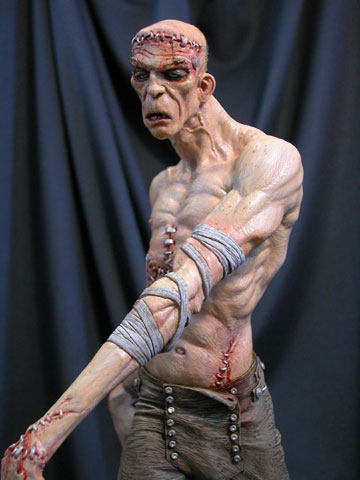
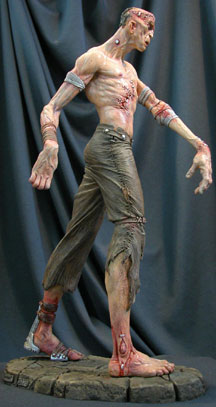
The thing that stands out about him isn't that he's so hideous or even how he was created. Granted, those factors are really cool! He's yellow-skinned and patched together with visible stitches. He was animated through a clever use of electricity and somehow endowed with a soul. But, this monster's tale is far more interesting because of how he is treated by his creator, Dr. Victor Frankenstein.
Had he been treated as a special creation, he surely would have turned out lovable and kind. But, Victor abhorred him the moment he came to life. How hypocritical can you get? It's a tragedy because the monster didn't have to commit so many atrocities if he had been loved as any child deserves by their parent.
Sure, the monster grew into a mind that could reason and even learned right from wrong, yet he chose to make his creator's life miserable for revenge. That was wrong of him, but it all started with Victor and his inability to take responsibility for his own actions. He just runs around, acting like a demon is after him for no reason, even though he created this monster! What an idiot.
But, this is what gives this story so much depth and forces us to ask so many questions about the nature of man and our relationship to our creator, whoever we each believe that being to be.
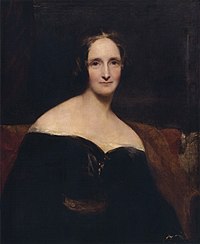
What I find fascinating is what I discovered about the author, Mary Shelley, and her life, which is what inspired her to write this tale. She was raised by a very liberal-minded philosopher named William Godwin who was the equivalent of a 1960's hippie for his era. He did not believe women should have to marry and that people should live more naturally. He detested laws and cultural values forced upon people, and even preached political anarchy. This guy was seriously unhinged for his day and age.
But, when his lovely daughter, Mary Woolstonecraft Godwin, was 16-years-old, she fell in love with a man who sought out her father's philosophy and wanted to live it. His name was Percy Shelley and he was just as much a proponent of anarchy and liberal society as was Godwin. Mary and Percy decided to live as liberal a life as she was raised to live, which meant they shacked up and had children all while not being married. Percy even had another "wife" at the same time, practicing bigamy.
This, oddly enough, outraged Mr. Godwin, Mary's father, and he disowned her. She was so devasted to be cast-off from her father who raised her to live against the grain of society, and when she decided to live like a modern day hippie, he couldnt' handle it. No, she had to get married and raise children like a normal, proper lady, according to her father. What? So crazy and so hypocritical.
This painful split with her father leaked into her manuscript during that fateful vacation spent with her husband and Lord Byron in Switzerland. Thus, the hypocrisy we see in Victor is directly lifted from her own father's hypocrisy over her common law, bigamous marriage to Percy Shelley.
In time, she and Percy did get married and the other woman, a relative of Mary's, got fed up with the relationship and left. When she properly married Percy, her father accepted her back into his good graces, but I doubt she ever saw her father the same way again. Her life was full of tragedy and the deaths of children, loved ones, and everything she ever believed in.
Anyway, neither story has a happy ending, but I love that the novel makes us really think and opens up a grand discussion about our responsibilities to our own creations, namely, our children. Nature versus nurture--how much of it determines the course any being decides to tread in life?
How much of human behavior and decision-making is nature or nurture? In your opinion, how much can bad parenting damage a child?